

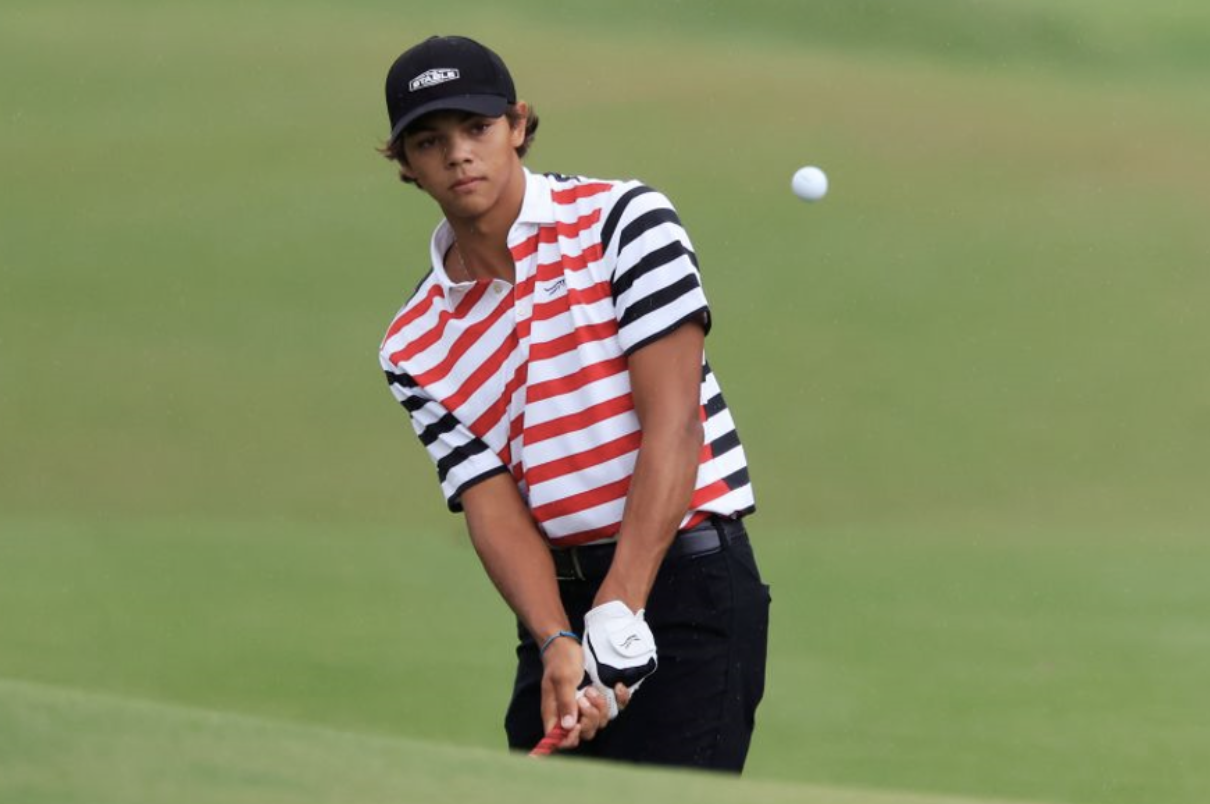
There are few young golfers with the expectations of Charlie Woods. As Tiger Woods’ son, he has access to the upper echelons of golf and the comparisons to one of sport’s most iconic champions.
Their PNC Championship run has provided some glimpses of their relationship and Charlie’s ability. That fascination extends to sports betting, where fans exploring markets and a Parimatch bonus may be wagering on the future of golf. A 2026 return has not been confirmed. What would it look like to carry this legacy?
The weight of a name: What is the ‘Woods’ legacy?
The challenge is Tiger’s record. He has won a total of 15 major championships and 82 PGA Tour events, sharing the Tour’s all-time victories record with Sam Snead. Woods went on to win the “Tiger Slam” in 2000 and 2001, meaning he was the holder of all four major titles at the same time (across two calendar years). His 2000 season stands as a model of domination.
Woods contributed to the expansion of golf’s fan base, brought a new perspective to popular culture and reshaped the idea of what it meant to be athletic, prepared and competitive. His commercial footprint redefined the way that sponsors relate to golf. His 2019 Masters victory came after years of injuries and setbacks. His legacy is a blend of success and cultural impact, and popularity.
A chip off the old block? Analysing Charlie’s developing game
It is important that Charlie’s progress is measured by competition, not viral clips. He has a decent junior resume at 17. He captured the 2025 AJGA Team TaylorMade Invitational, and tied for eighth in the 2026 Junior PLAYERS Championship. He is ranked 134th in the AJGA Rankings, which are released by the American Junior Golf Association, in a competitive field. Certainly a foundation, but no forecast.
He demonstrated promise and potential for improvement in his last high school performance. He broke the school record for the 2026 Florida Class 1A state championship with a five-under-par 67, and took the lead. He followed with a three-over 75 in tough rain and wind to finish fifth. It wasn’t a title, but he demonstrated he can come up with an exceptional round in varying conditions.
The swing and the swagger: Echoes of a champion
It is not lost on viewers that the father and son share some key traits; a high-speed setup, strength through movement, style and ease with the competitive game. Some have likened the broadcast swing to others, and when PNC Championship moments arise Charlie has an enthusiasm for celebrating a shot that’s more like his father’s.
Resemblance is not destiny. As they get older, stronger and coached, swing mechanics change. Charlie is working on his own designs and there are no promises of the same results due to technical similarities. His calmness around Tiger could prove to be an asset to him, and an experience that few young players can boast. However, when the relationship is so close, the scrutiny can intensify, and every missed shot feels like a point in an unfair argument for inheritance.
Beyond the fairway: The unique hurdles Charlie faces
Before competing in a professional tournament, most promising juniors are compared with other juniors; Charlie is compared to a 15-major champion. Social media platforms exacerbate the magnification of singular moments and cameras can make even typical development feel like a public test. Allowing space to learn, to fail and improve will be key.
The game of golf is also harder and more technical than it was when Tiger came on the scene. Today’s top players are a combination of specialised coaching, launch-monitor data, fitness programmes and performance analytics. There is a large talent pool and it is international. Over long seasons, the players have to be flexible, deal with pressure and make good decisions.
Other sporting families demonstrate there is no one right path. Bronny James was drafted under a lot of scrutiny because of his father LeBron, but his NBA career will need to be measured by his own performance. There’s the Manning family, which is another example of success from generation to generation, yet with different playing styles and individual achievements. Well-known last names can create opportunities but they cannot do the job.
What does ‘carrying the legacy’ really mean?
Charlie has made an important decision about what to do next. Having committed in February, he made it official on 6 November 2026, signing with Florida State’s men’s golf program for the 2027-28 season. College golf will bring some stiffer competition, team responsibilities and a change from high school to college golf.
Tiger’s responsibility can be most important as a father and a mentor, not a blueprint. He has experience in preparation, strategy and failures. Equally important will be offering Charlie choices, opportunities for independence and a chance to chart his own success.
Does he have to win 15 majors to honour his father? It’s a very high bar indeed for any young athlete. Going to college and finding success there, or a job or a lifelong involvement in golf could be significant accomplishments. Legacy isn’t the inheritance of numbers. It can be passed on by disposition, good work, sportsmanship, toughness and/or contribution to the game even when records are not shattered.
Conclusion: Forging a path of his own
Charlie has shown he’s capable, with tournament-winning form and spectacular rounds. The fifth-place finish in the state championship he just competed in is one reminder that development comes with a mix of good days and bad days, headlines and not. The Florida State pledge does provide him with a clear next stop, albeit not a certain one.
Comparisons will still be made to Tiger, their tale is all too compelling. Yet, Charlie needs time to develop his own golf. It remains to be seen if he will ever make it to the professional game’s highest level. At this moment, the most interesting aspect of the Woods legacy is watching a new generation take independent steps, not forcing the future to replay the past.