

Golf technology often fails the believability test in one of two directions. Either it’s so far over the top that you assume somebody in marketing invented it or it’s so simple that you assume it can’t possibly do anything of consequence.
PING’s Quiet Eye work lands squarely in the second category and to the company’s credit, nobody there seems particularly invested in pretending otherwise.
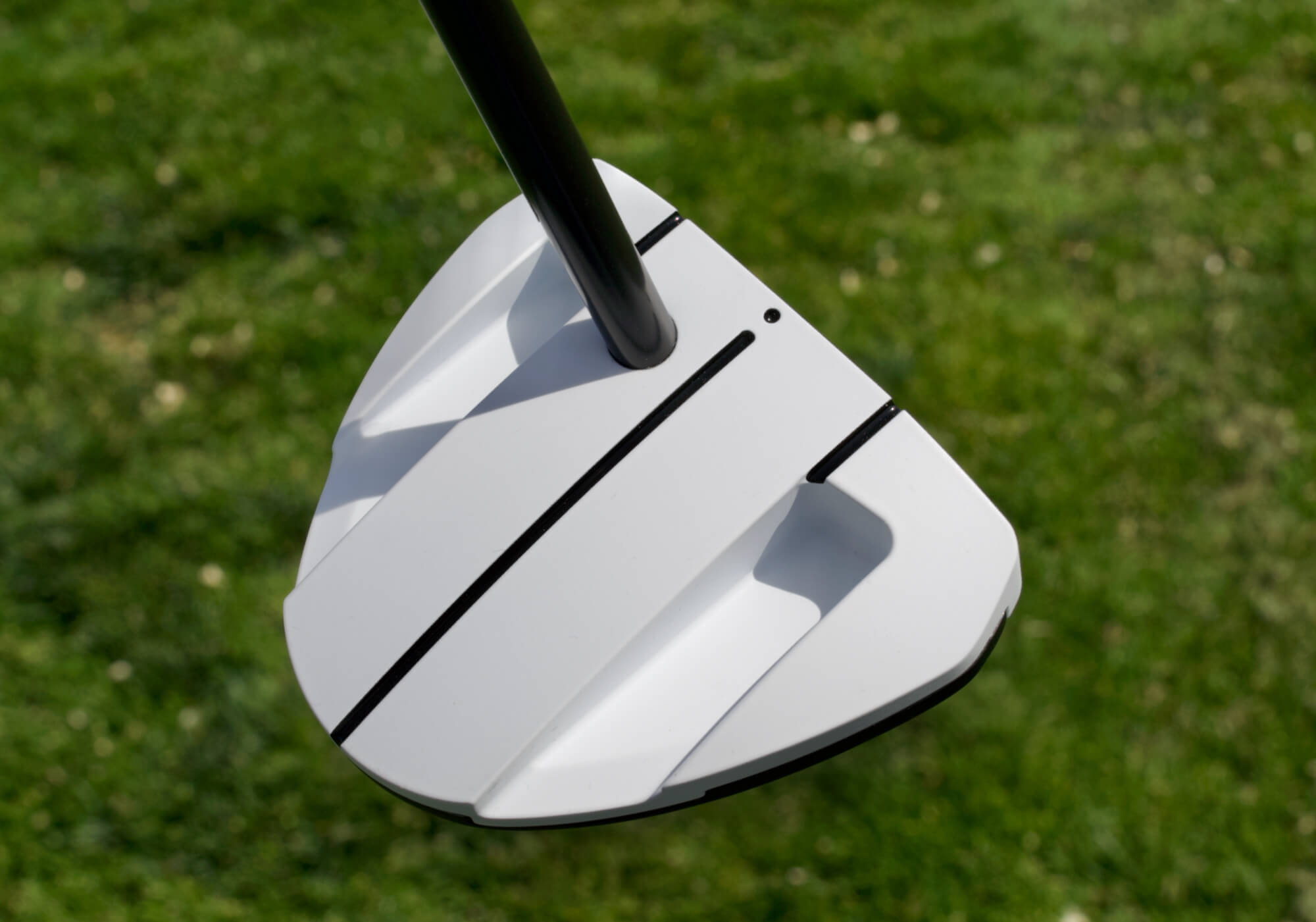
“Very openly, it’s a dot on a putter,” Ryan Stokke, PING’s Director of Product Design, told MyGolfSpy last December. “And it’s not super hard.”
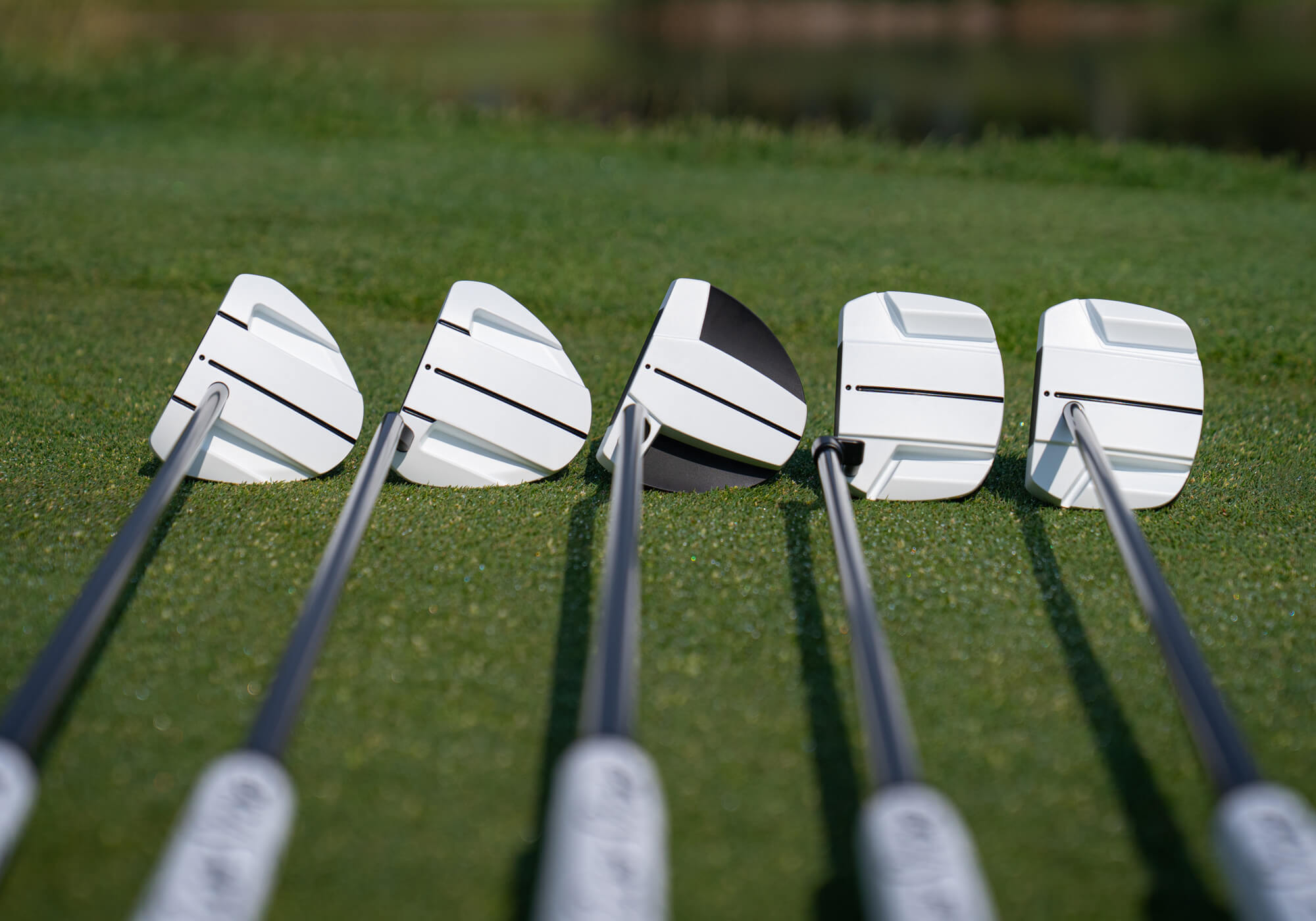
That’s the technology. A dot on the topline, sitting forward near the leading edge, with a short line running back behind it. PING calls it Eye Q and it entered the conversation this spring on the Scottsdale TEC mallets.
The dot is, well … a dot. If PING isn’t going to oversell it, I won’t, either. The science behind why it’s there is the interesting part.
Quiet eye, quiet mind
“Quiet eye” is not a PING invention and it is not new. Kinesiologist Joan Vickers coined the term at the University of Calgary in the 1990s and the research has since spread through basketball, marksmanship, soccer and pretty much every other sport where somebody has to aim a thing at a different thing. Narrowly defined, quiet eye is the final steady fixation on a target before the movement begins. For example, the seconds (or milliseconds) before you start your putting stroke.
The interval we’re talking about is narrow and short. It’s the last beat before your brain sends the signal to go, not your entire pre-putt routine. What a growing trove of data suggests is that the best in the world at pretty much anything hold that final gaze longer and hold it steadier than the rest of us. For the best golfers in the world, that’s two to three seconds in the final gaze before pulling the trigger. Higher handicaps land closer to one.
The mechanism, as PING explains it, is bandwidth.
“Your mind can only do so much processing,” Stokke says. “When you can move it to the next type of processing more quickly and adapt it to that next step, it allows you in sport to actually execute that task better.”
The obvious version of that is the 16th tee at the WM Phoenix Open where thousands of people are actively working to occupy the part of your brain you’d rather have thinking about the shot. Quiet eye is about the same drain coming from a place you’d never think to look. Eyes that can’t find somewhere to settle burn the same processing power the crowd does and they burn it on an empty practice green with nobody within a hundred yards. A putter can’t do anything about the crowd. It can do something about the eyes.
I suppose if you’re looking for the cool feature of Eye Q it’s that it doesn’t require your active participation. There’s no drill, no count, no cue to remember while standing over the ball. The premise is that you buy the putter, go play golf, and never once consciously think about the dot.
PING found the research through a sales rep in Florida who was working with an academic in the golf space. That was more than a decade ago and the company has been picking the topic up and putting it back down ever since. Erik Henrikson, PING’s Director of Golf Science, frames the engineering problem like this: quiet eye is trainable, and coaches have trained it, but training takes work.
“The question for us as an equipment manufacturer is, can we induce that behavior without having to have somebody go through a bunch of training?” he says. “Are there certain putter designs or things we could do on putters that would create this behavior, lower cognitive load, and help somebody putt better just by changing their alignment aid rather than overhauling their training regimen?”
Quantifying Quiet Eye
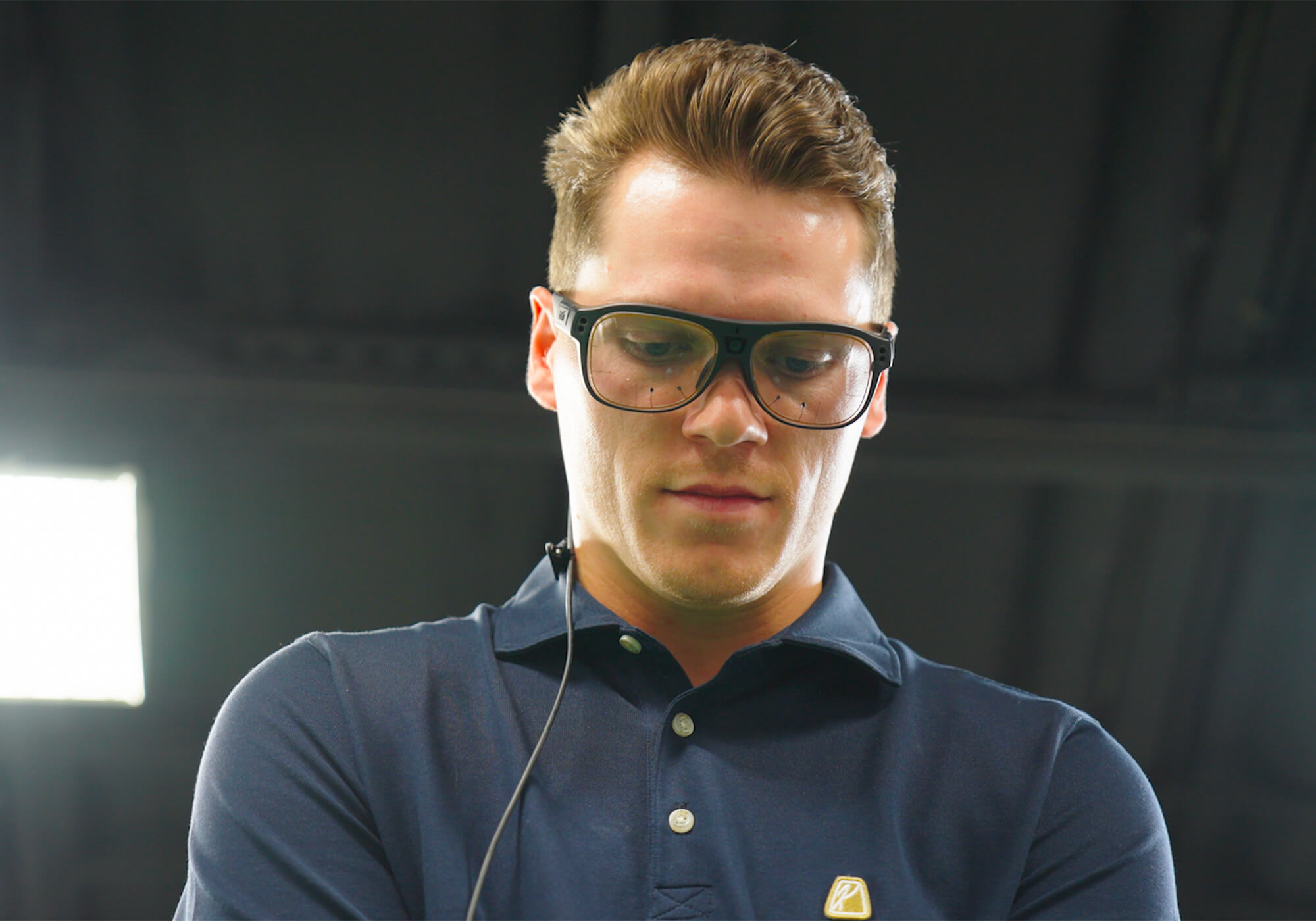
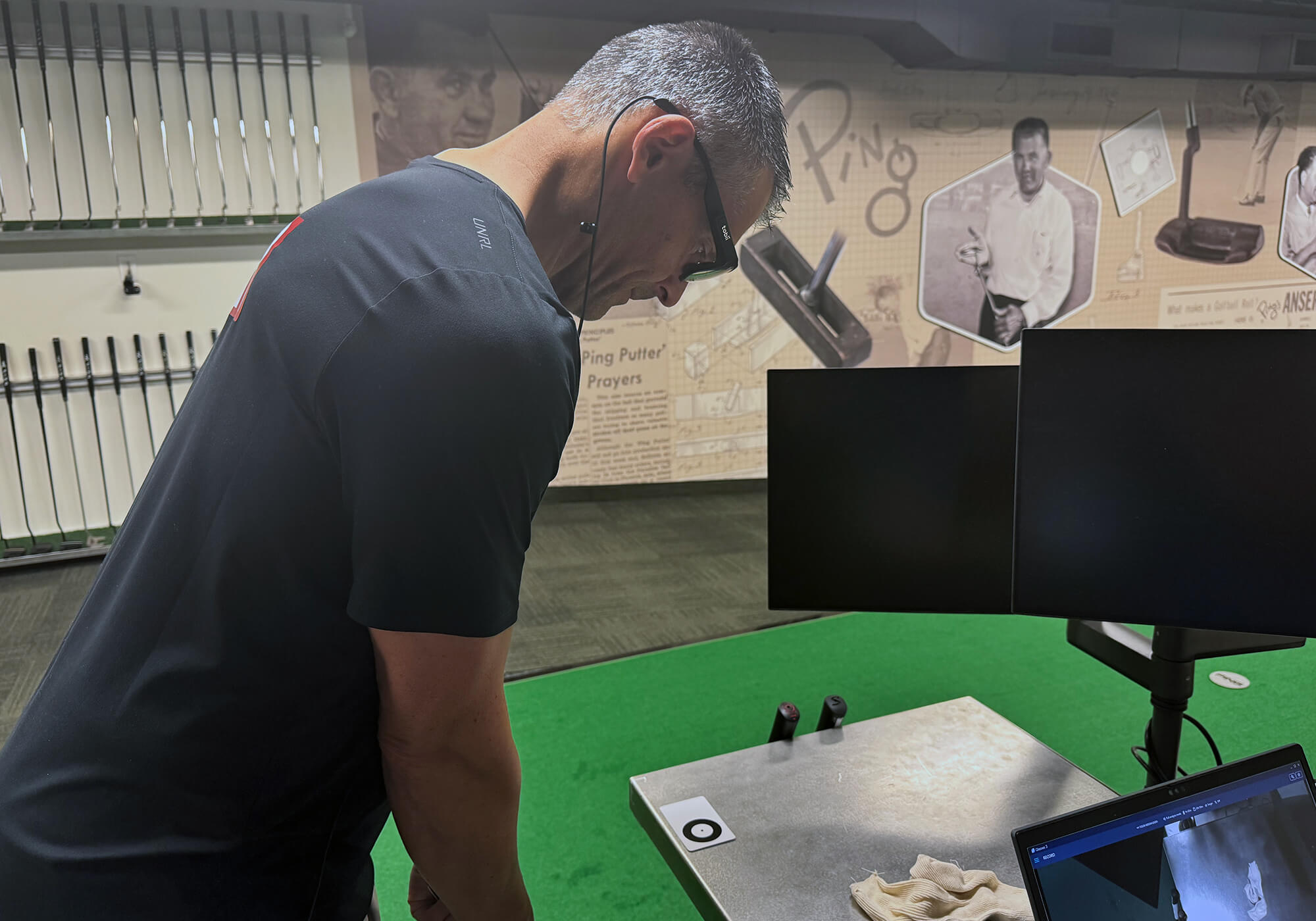
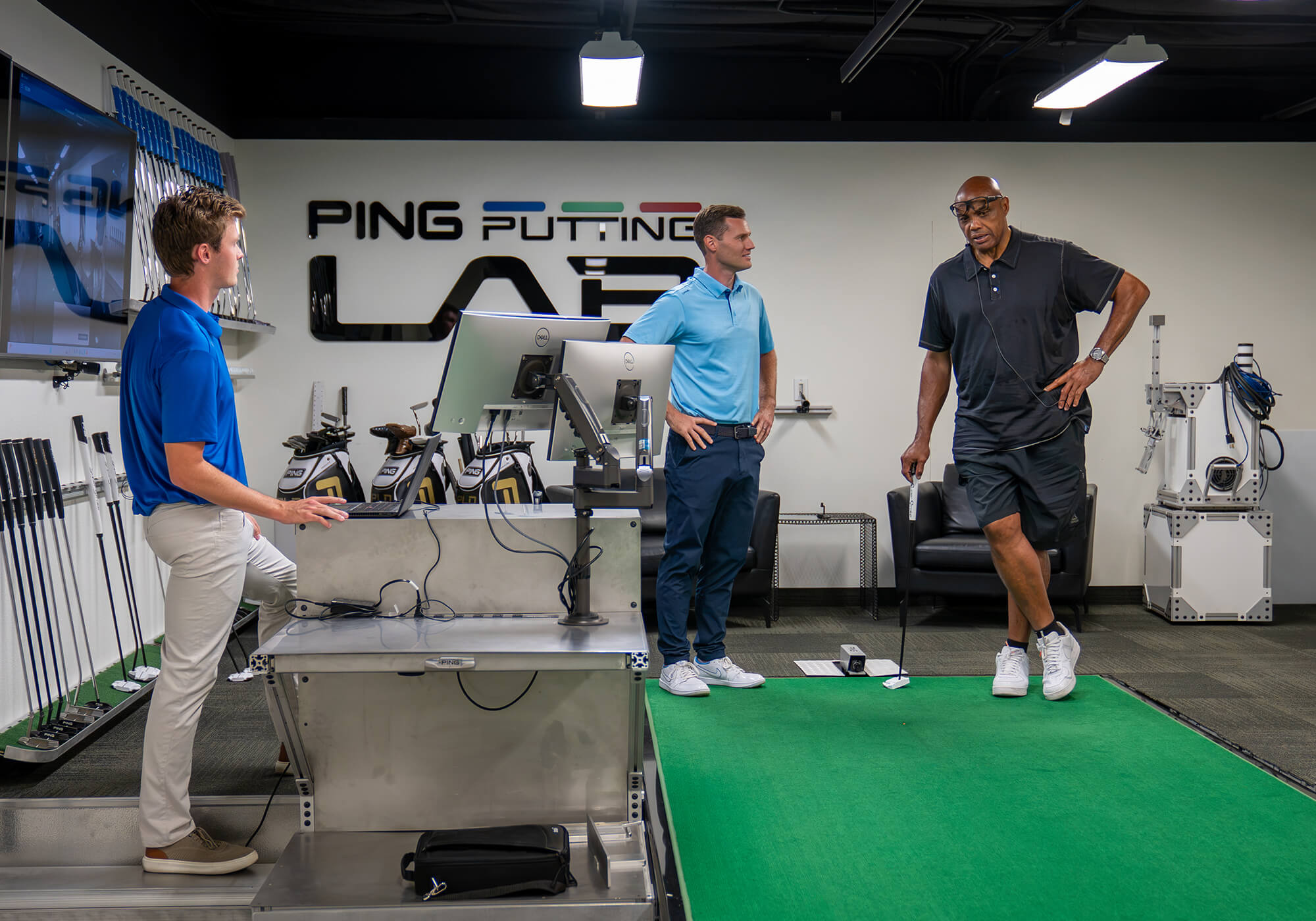
To know whether something works, you have to measure it. In the case of PING’s Quiet Eye, the measurement tool is a pair of Tobii eye-tracking glasses. One of the biggest commercial uses for this hardware is in retail research where brands pay to learn which shelf your eyes hit first and how long they stay there. PING is basically running a shelf-placement study on a putter alignment feature.
The glasses capture two things: saccades and fixations. A saccade is a shift in gaze, the jump from one point to another, for example when your eyes dart from your putter to the hole and back again. A fixation is what happens when your eyes hold within a set threshold of distance and time. There are also micro-saccades happening constantly underneath all of it, fast enough that you have no idea they’re occurring.
“You’d be like, what are you looking at when you putt? Well, I look at the ball,” Henrikson says. “And then when you put the eye-tracking glasses on, there’s all these micro-saccades that happen. You don’t realize it’s happening. But it still loads your cognitive ability to execute whatever task it is you’re trying to execute.”
The research also gives you a rough map of where elite putters focus. The consensus is the space between the leading edge of the putter and the front of the ball. Not the hole. Not the back of the ball. That narrow gap.
How PING ended up with a dot
PING started by building a pile of putters with different alignment aids and putting them in front of eye trackers. “We did a bunch of these different alignment line designs, not really knowing what we were trying to do, but just trying to figure out, OK, let’s just shotgun approach it and see if one stands out,” Henrikson says.
One stood out. It was a thick line with dots set into it and it produced a dramatically tighter gaze pattern than anything else in the group. That result was slightly annoying because the line was the thing PING thought it was testing. A plain line had people scanning up and down its length. A two-ball design had gaze scattered everywhere. But with a dot in the mix, the eye stopped hunting.
“Even though it had a long line, that dot, whatever it did, anchored the gaze,” Henrikson says, before immediately correcting himself. “I’m instructed to not use the word ‘anchor’. Such a negative connotation in golf. We’re trying to use ‘tether.’”
From there it was variations on a theme: segmented lines, a dot on the top rail of an Anser, gaps punched into a line. One of the practical headaches is that a dot up front and a line behind it don’t always read as one piece. Depending on where your eyes sit over the ball, the two may not appear aligned which isn’t a problem you have with a line by itself.
Then the whole experiment stalled, for the most PING reason imaginable. Engineers could see the gaze behavior change. What they couldn’t definitively show was that the gaze behavior mattered when it came to making putts.
“With drivers and irons and everything else, we’ve gotten really good at measuring performance differences and going, yes, this is better,” Henrikson says. “With putters, we’ve really struggled being an engineering company and making all our decisions based on engineering results. We were like, we can’t measure somebody being better with that than not so we’re not gonna do it.”
And so PING sat on it for a bit, although it’s worth noting Karsten Solheim was putting dots on putters in the 1960s, which means PING spent the better part of 60 years getting around to explaining something it (and a good bit of the rest of the putter industry) had already built.
A lack of focus
The flip side of tethering the gaze is everything else on a putter that scatters it and this is where PING has quietly been leveraging eye tracking for years.
PING’s metallic holographic shaft label was an early research casualty. We’ve told this story before but the summary version is that in an early eye-tracking study, PING noticed that golfers’ eyes were unexpectedly breaking focus and shifting to a point high on the shaft. It turned out that the shaft label (common to many putters) was causing golfers to lose focus on the impact zone. To solve the issue, PING shrank and relocated the label. “Out of sight, out of mind”, I suppose.
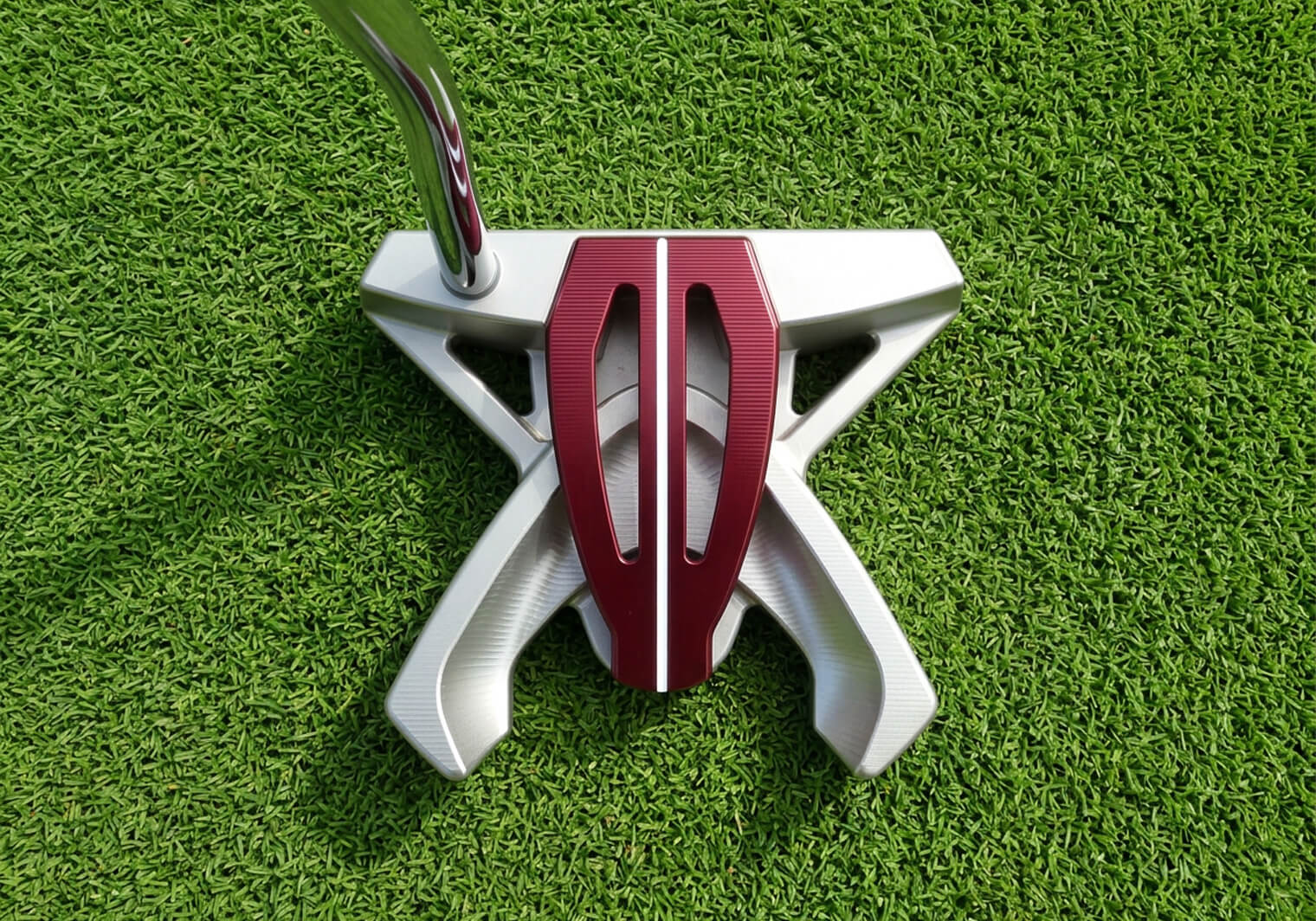
And then there’s the Sydney, a PING mallet with a bold red alignment aid running from the face to the back of the head. It gets brought up as a cautionary tale by PING’s own engineers. “You look at that putter and you’re just like, whoa,” Henrikson says. “Of course it was all over the shop.”
The approach extends past putters. When PING pulled the turbulators off its fairway woods and hybrids and replaced them with crown dots, the company wasn’t thinking about gaze behavior. Going back and looking at it afterward, they found similar behavior to the putter work.
Which brings me to the thing in my own bag. After sitting through PING’s December presentation, I went looking for a putter with a single dot on the top rail. On the design I landed on, one dot wasn’t an option so what I ended up with has three of them clustered together. My reasoning at the time was airtight: if one dot is quiet, three has to be silent.
Henrikson’s read on multiple dots is that spacing decides it. Three dots far enough apart can work fine. Three dots close enough together to read as one busy cluster may be adding cognitive load rather than removing it. There’s no test data on my particular putter but the principle isn’t complicated: if there’s something to look at, you’re probably going to look at it, even when doing so works against you.
What the testing shows and what it doesn’t
PING revisited the Quiet Eye concept about two years ago. Its ability to measure had improved so the company decided to give it another shot and see if they could land on a real answer. PING now runs the test sequence in stages: flat indoor putts first to strip variables out, then an adjustable green with break and varied distances, then outdoors on a built course in head-to-head competition. Stokke says they’ve run the test with three separate player groups and each time Eye Q led to fewer putts.
That said, a dot on a putter is not a panacea. On the gaze metrics, 67 percent of testers showed a measurable improvement. Two out of three ended up with a tighter dispersion heat map and longer dwell time. The other third showed nothing of consequence. And, not surprisingly, the players who benefit most are the ones who need the most help. Better putters have already trained a quieter eye without anyone asking them to, exactly where the original research came from.
The summary reads like this: you might not see a reduction but you’re not going to get worse. Henrikson backs that up. Finding somebody who putts worse with it is rare. The realistic outcomes are better or the same.
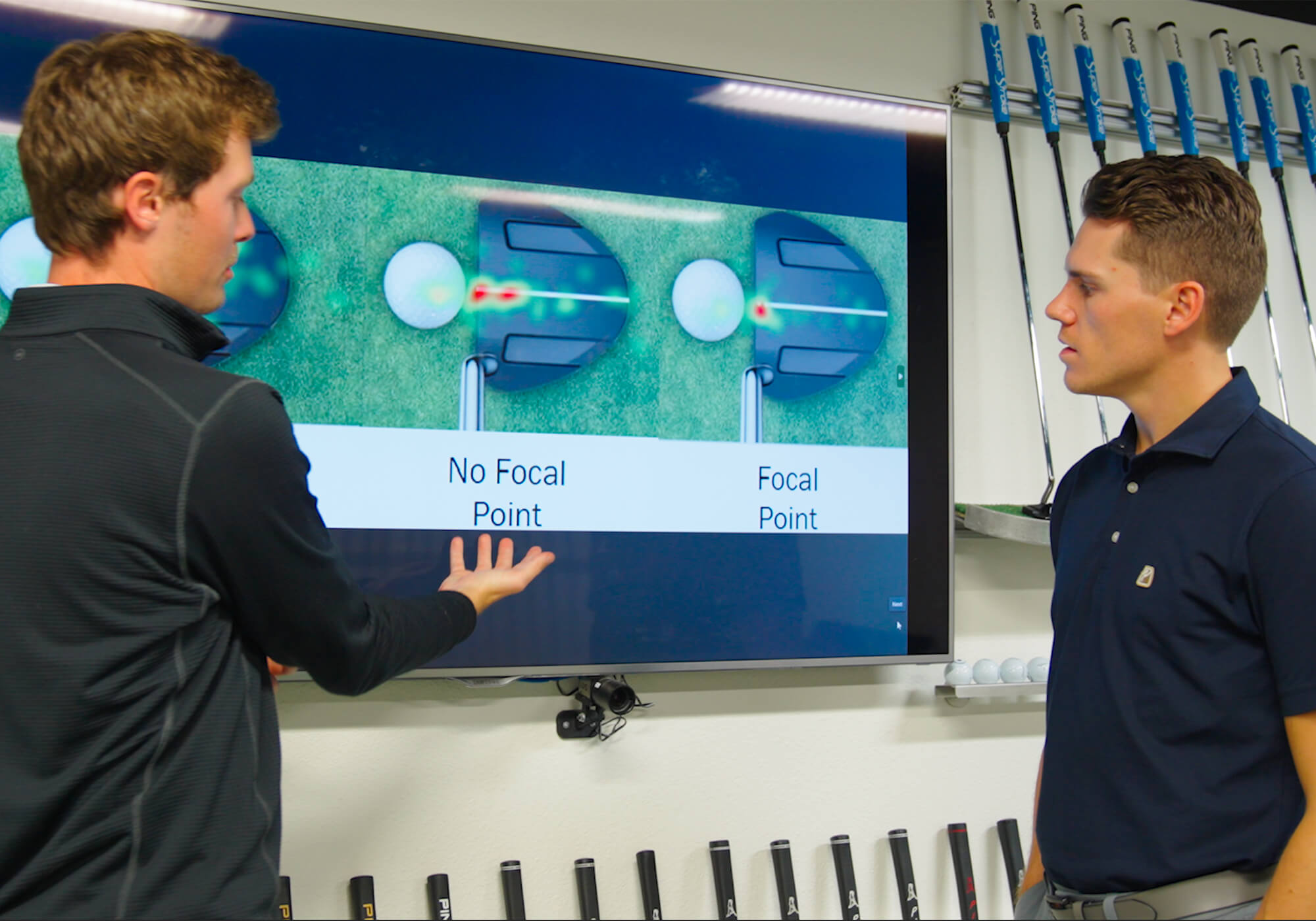
In an industry driven by claims, I suppose that’s modest. It’s not a driver face story where it’s not unusual to see 20 out of 20 players pick up ball speed but it’s something quantifiable and real in a category that’s typically short on empirical data.
One interesting non-empirical data point: through PLD, PING’s custom putter program, more than a third of orders were going out the door with some kind of top-rail alignment feature before Eye Q existed as a product. A dot, an ellipse, a short line. Nobody was wearing eye-tracking glasses during those fittings. Golfers and fitters seemed to be landing there on their own.
To an extent, PING’s Eye Q is built around something many golfers have gravitated to anyway. The difference is there’s now data to support the choice.
Three putters, one pair of glasses
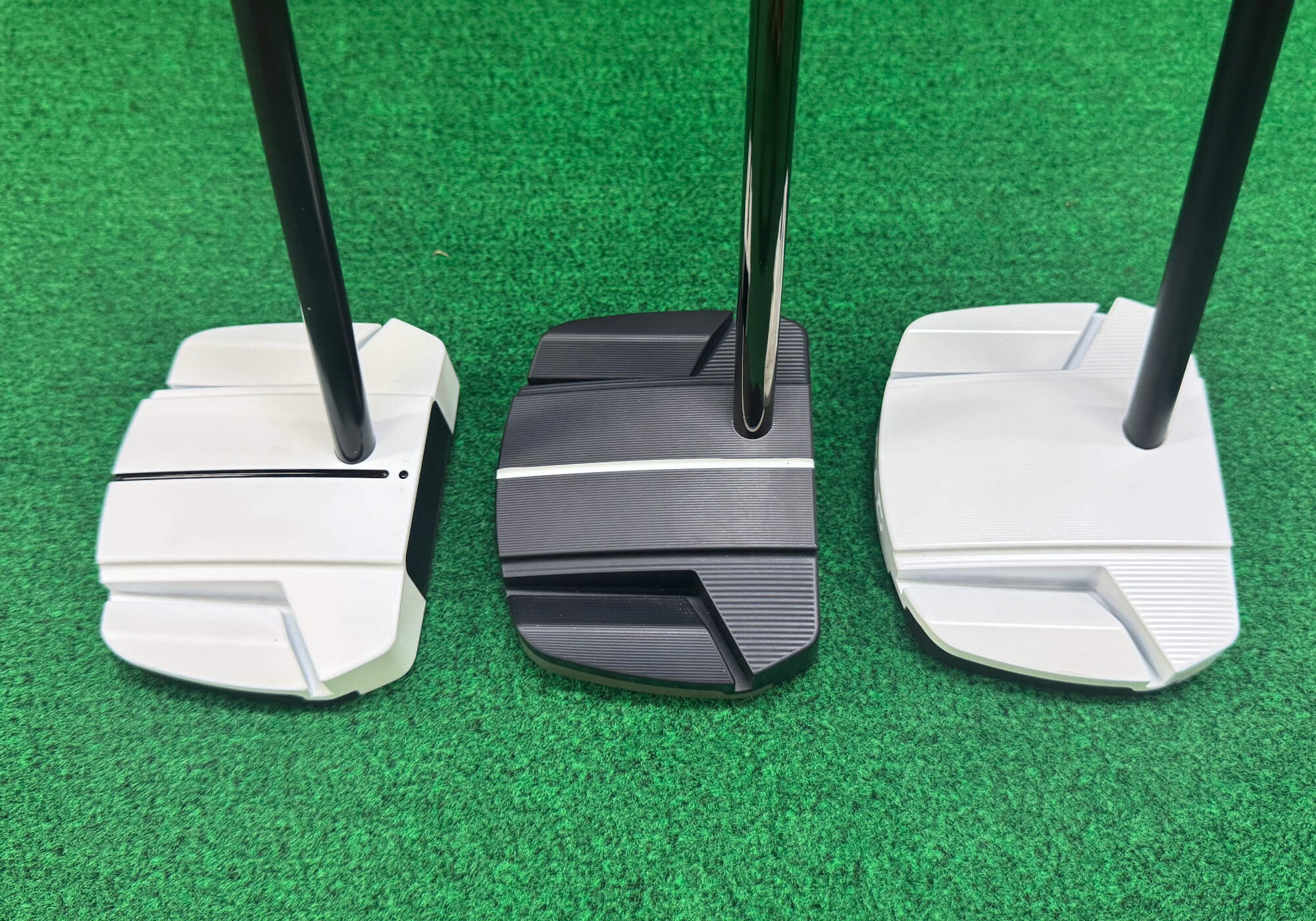
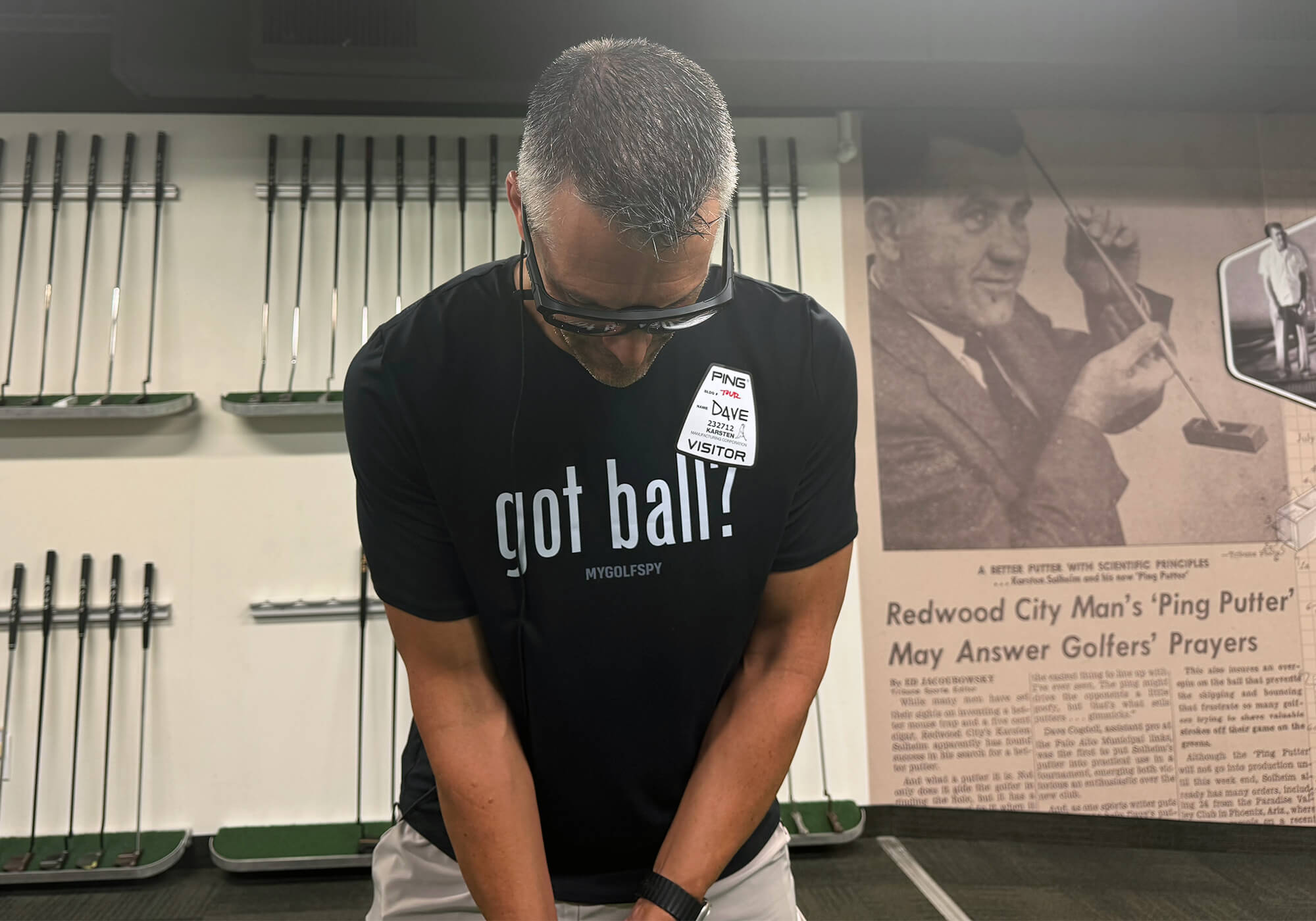
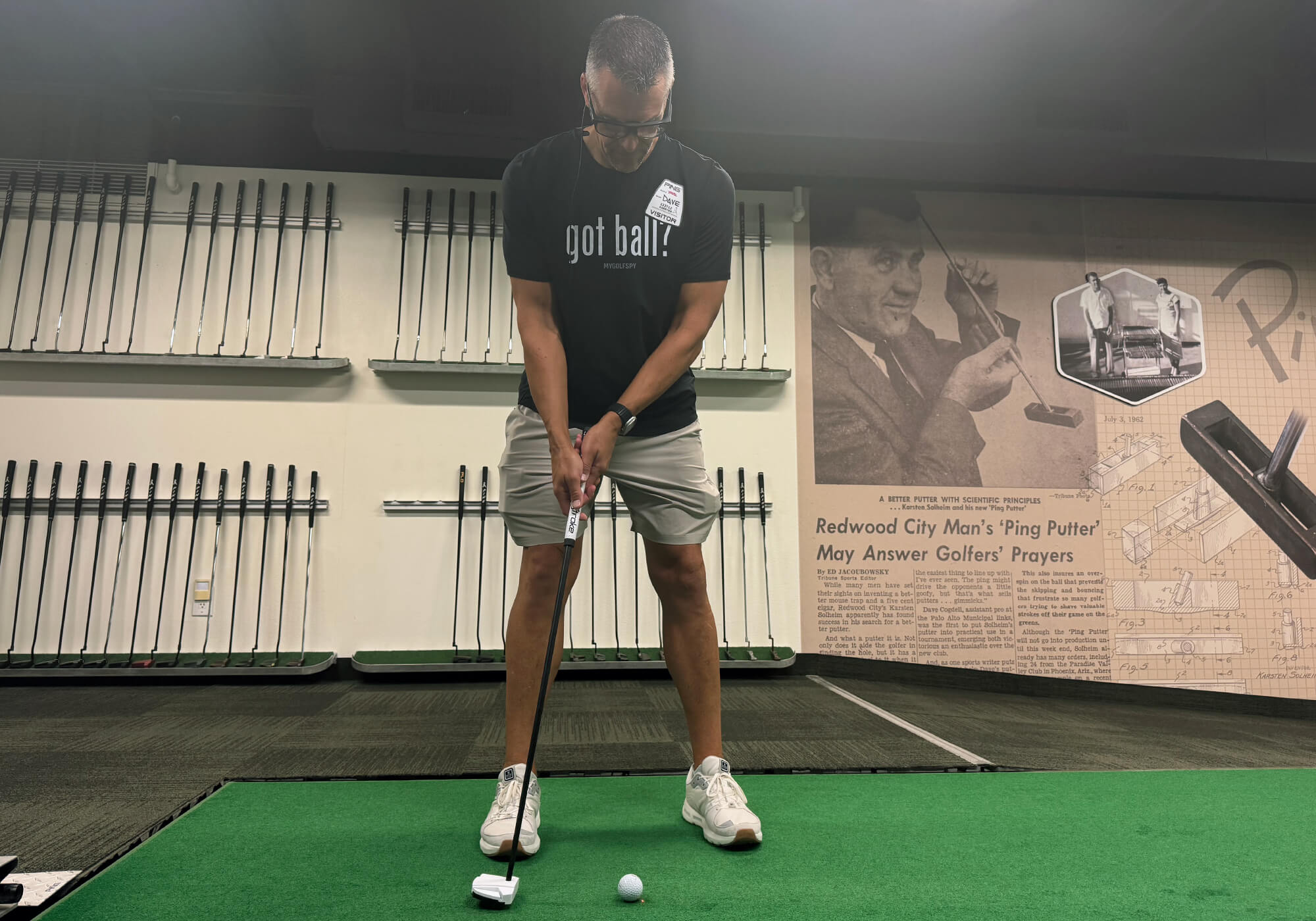
At PING headquarters in July, I stepped through the Eye Q demo. Glasses on and calibrated to my putting posture, I hit three putts with each of three putters to a target 10 feet away. Blank head first, then a full-length line, then Scottsdale TEC.
For me, the blank putter was awful. Not awful as in I missed. Awful as in I have never felt so lost with a putter in my hands (and that’s saying something). There was no visual cue anywhere and I spent the whole time hunting for something to look at before finally giving up and staring at the number on the ball. The playback of the eye-tracking video matched the feeling exactly. My gaze was clustered but jittery right where a fixation should be. With nothing to anchor (sorry, tether) my gaze, my eyes raced up and down a putter with no concrete point to focus on.
The line was better and that came through in the video playback. My gaze came back from the hole and traced the length of the line before settling. The dot version produced a single long fixation before the stroke and it wasn’t like I was trying harder to focus.
That’s the design working and it’s also the problem PING has selling it. You can’t explain a subconscious feature to somebody without making them conscious of it.
“The point isn’t for you to get up there and cognitively go, ‘stare at the dot, stare at the dot,’” Henrikson says. “It’s meant to be a subconscious like, ‘OK, it’s there, and I know it’s gonna help me.’ This whole thing’s a subconscious behavior anyway.”
But the putter comparison wasn’t the part that got me. If you had asked me a month ago whether I have a putting routine, I’d have told you no. I would have said there was no standard way I set the putter down. No consistent rehearsal. Nothing I could have described to you.
The glasses said otherwise. Once I’m over the ball, I do the same thing every single time. Long fixation, shift to the hole, shift back, go. Same sequence, same order, three putts in a row, across three different putters. I had no idea. What changed between the putters wasn’t the pattern; it was the intensity of the gaze inside it which is another way of saying the focus.
There’s a detail from one of PING’s internal test reports that stuck with me. A player hit six putts and ran the same routine on five of them. The one she missed was the one where the order of her routine changed.
Does it have to be a dot?
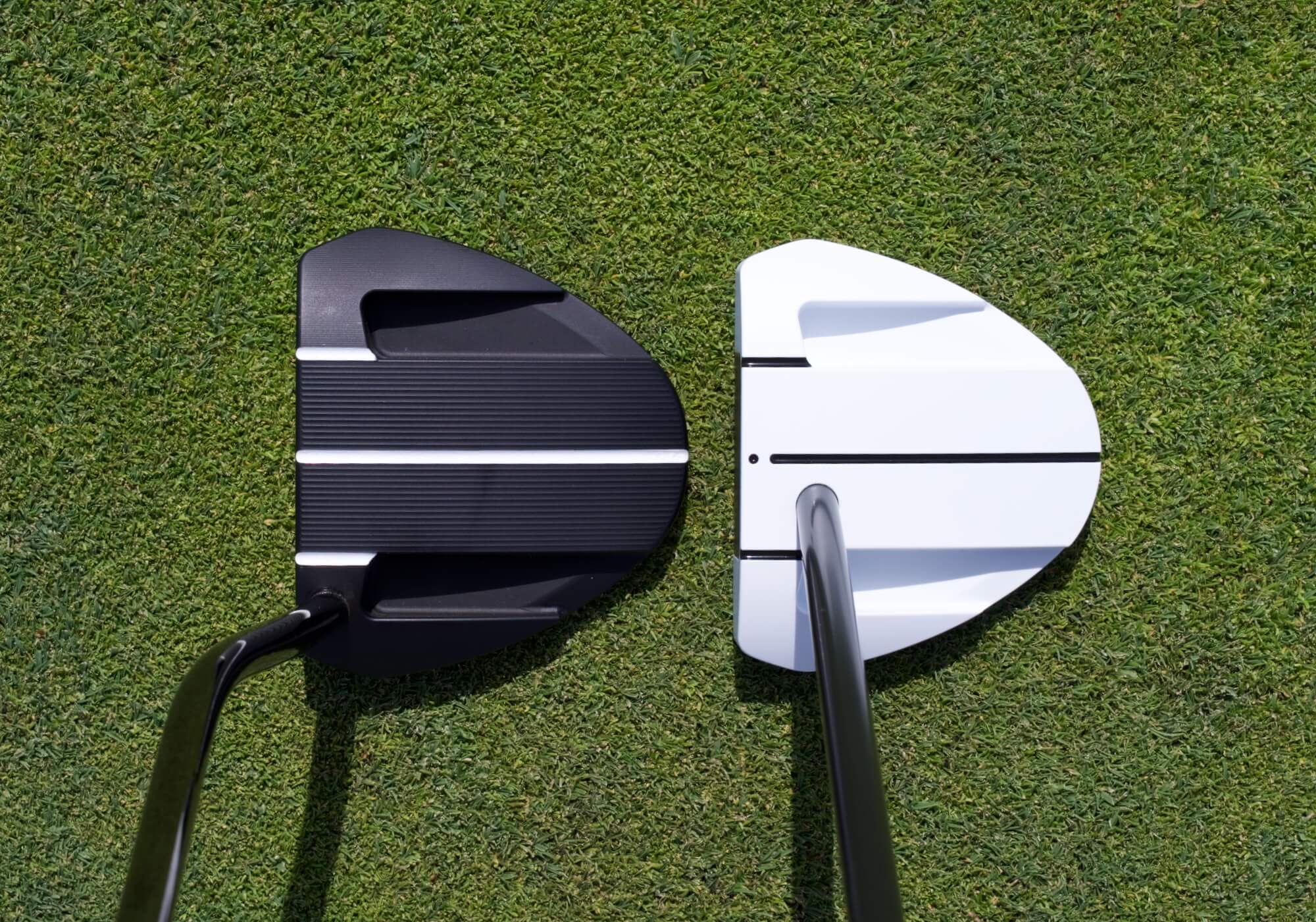
All of this got me wondering: to get the benefits of Eye Q, does the alignment aid have to be a dot? According to PING, not necessarily.
On the heat maps, a dot edges out a short line. You still get some jitter with a line, even a short one on the top rail. But when PING compared a dot against a full-length line on the metric that actually pays, putts made, the difference didn’t reach significance.
So the honest version is that the dot looks better in the gaze data but looks like a wash in the outcome data. Hold onto that distinction. It’s the difference between a mechanism PING can see and a result everyone (PING included) can bank on.
PING has tried plenty of other alignment features. The list includes segmented lines, a gap punched into a line so it reads almost as a square, a full-length black line with a white dot set into it, pills, two alignment lines with a dot dropped between them. The concept travels. If you set up better with two lines, you can have two lines and still experience the desired tether. The line helps you align the putter. The dot keeps you focused.
Worth a brief mention since it shares the same product line: Eye Q is one of two stories powering the Scottsdale TEC family, the other being onset. PING’s position is that onset does most of the useful work people credit to zero torque, and that running the shaft through the center of gravity costs you something real. That bit of torque you feel in your hands is the head telling you where the face is pointed and taking it away leaves you without an important cue. Having just been through a putter fitting that confirmed I have a strong arc and very active hands, that tracks. Zero-torque putters go right for me, every time, and after three rounds I knew exactly where it was going which is the worst possible thing to know standing over a putt. That’s a longer conversation for another day.
Better or the same
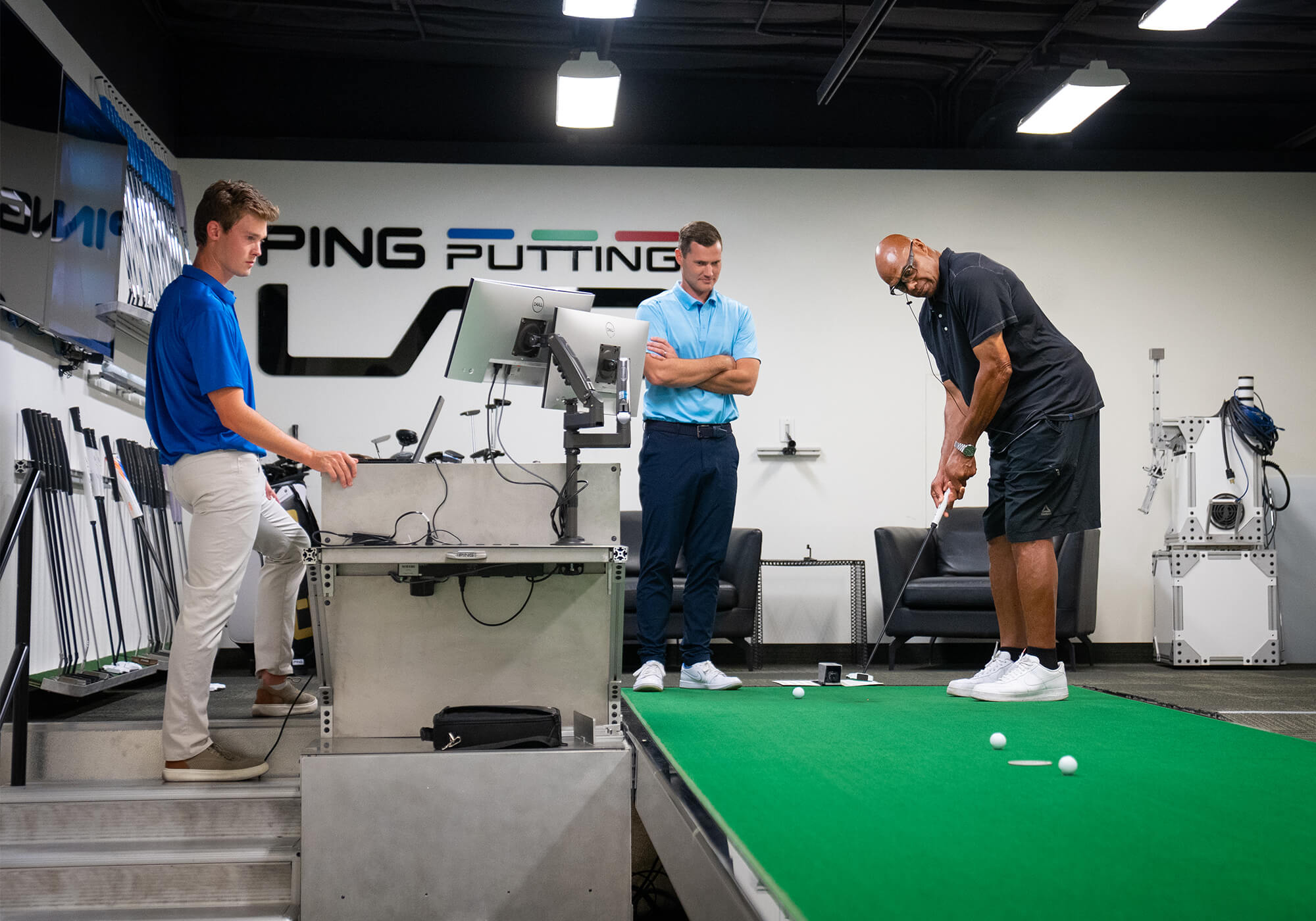
The data collected during my demo suggested I putted a bit better with the dot. I don’t think three putts on a flat indoor 10-footer are incontrovertibly conclusive and neither does PING which is why the company spent a decade refusing to market a dot on a putter until it could measure what the dot was actually doing.
What I came away with was a picture of my own putting I didn’t have going in. There’s a routine in there I would have sworn didn’t exist, running the same way every time, and a putter’s job in that sequence is smaller and more specific than the marketing around alignment aids would have you believe. It isn’t aiming you. It’s giving your eyes a place to stop hunting for the second before you pull the trigger.
And then there’s the claim itself. Almost nothing in golf equipment is free. Every gain is a trade and most of the time the sales pitch conveniently omits what you’re giving up. PING’s pitch here is that the golfers who need it most get the most, some of you won’t see a thing, and essentially nobody gets worse.
That’s not the boldest marketing claim you’ll ever hear. It’s just true, which should be plenty good enough.
PING Eye Q technology is available on all Scottsdale TEC putters.
The post When is A Dot More Than A Dot? Inside PING’s Quiet Eye Research appeared first on MyGolfSpy.