

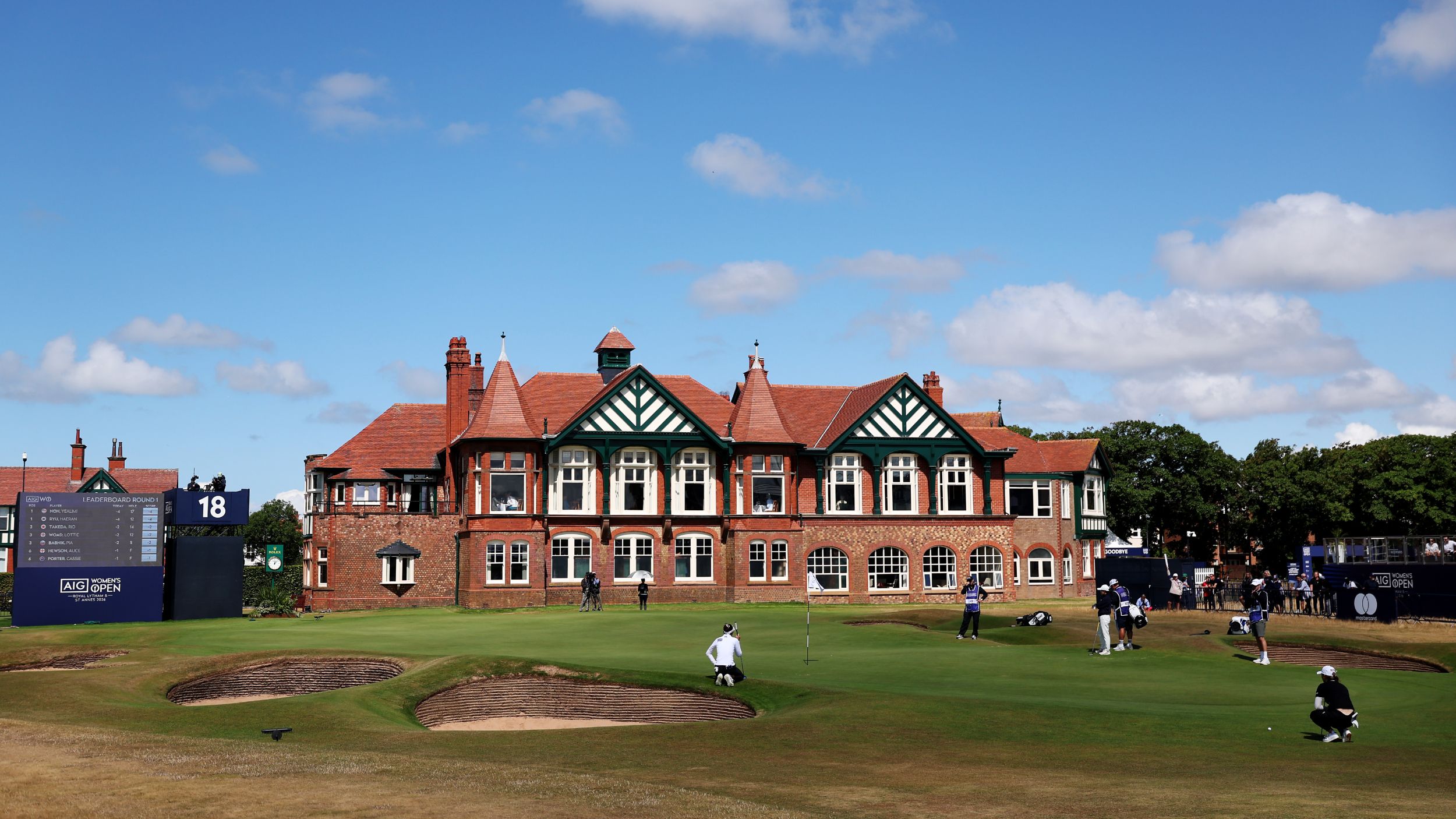
The final round of the AIG Women’s Open at Royal Lytham & St Annes was proving a tight affair.
At the start of play, Yealimi Noh appeared to be closing in on her maiden Major title, beginning with a three-shot lead.
However, she gradually lost her grip on proceedings as the afternoon wore on, with several players still harboring realistic hopes of victory with just a handful of holes remaining.
That brought the possibility of a playoff to determine the winner firmly into the equation, but what is the format if two or more players share the lead after 72 holes?
Yealimi Noh led after 54 holes, but she lost her grip on proceedings as the final round wore on
(Image credit: Getty Images)
If there’s not an outright winner in regulation, a sudden-death playoff will take place.
In previous years, that has meant each player co-leading heading back to the 18th tee box, with the same hole played over and over until a winner is found.
Sudden-death is a format that has already been needed for a women’s Major this year, when Haeran Ryu defeated Brooke Henderson with a birdie on the first hole of a playoff at the Amundi Evian Championship.
Since becoming a Major in 2001, the AIG Women’s Open has only needed one playoff to determine a winner.
That came four years ago, when Ashleigh Buhai beat In Gee Chun on the third extra hole at Muirfield.

Ashleigh Buhai beat In Gee Chun in a playoff four years ago
(Image credit: Getty Images)
However, the tournament has been around significantly longer, with the first edition taking place in 1976.
The following year, Vivien Saunders and Mary Everard finished tied after 72 holes, with Saunders winning on countback after her closing 76 bettered Everard’s 79.
There have been two other playoffs in the event’s history, in 1988, when Corinne Dibnah beat Sally Little, and 1990, when Helen Alfredsson beat Jane Hill.
TOPICS