

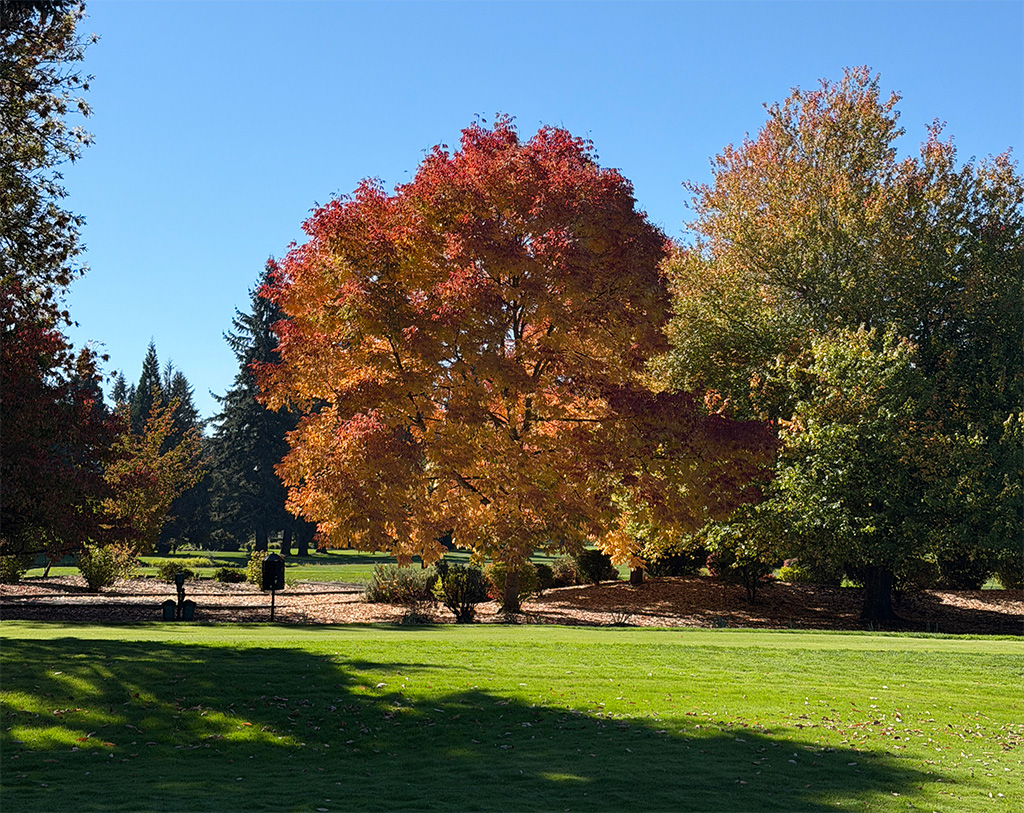
I played in my final USGA qualifier this past Tuesday at Arrowhead Golf Club in Molalla, Oregon. 54 teams of two competed for just two qualifying spots and two alternate positions for the national championship at Erin Hills in May 2027. Qualifying for a USGA Championship always comes down to the narrowest of margins, and this week was no exception. My teammate, Landon Banks, and I gave it our all at Arrowhead and had moments of brilliance. But was it enough?
In an 18-hole USGA qualifier, you have to be locked in from start to finish. There’s no room for error if you want to make it through. Our round started strong: I birdied our first hole (the 10th), and Landon followed with a birdie on 11. Two holes in, and we were already two under par: a perfect start. Our third hole, the 12th, was a 195-yard par 3 with the pin tucked front left. With the slope funneling toward the hole, we aimed for the middle of the green, hoping for a lucky kick left.
I won’t walk through every hole, but one moment perfectly illustrated the fine margins in qualifying. Landon pulled his tee shot slightly; it landed just left of the green and kicked even farther left, ending up past pin high but still manageable. I was up next and caught my tee shot a bit on the toe. It was on a decent line but dropped out of the sky too quickly, landing on the right edge of the bunker and rolling into the middle.
Neither shot was ideal, but both left us with a chance to save par. As we walked up to the green, it seemed my ball was near the left lip of the bunker — manageable, or so I thought. Up close, we realized it was just inches from the lip, making a traditional right-handed shot impossible. Landon’s ball sat near some bushes, and his backswing was impeded. Suddenly, what looked like two routine up-and-downs became much tougher. It’s the little things like this that add up over a qualifier.
We both managed solid recovery shots and left ourselves about 15 feet for par. I even went left-handed for mine, flipping a 9-iron upside down to bump it onto the fringe. It was one of my best shots of the day. Ultimately, we both missed our par putts. Not ideal so early in the round, but not the end of the world either.
The rest of our front nine brought mixed results. We just weren’t making enough birdies. I missed a short birdie putt on our eighth, but Landon drained a great eight-footer on 18 to send us to the back nine at two under par. With teams already at eight under, we knew we’d need something special coming in.

We failed to birdie the par-5 first hole (our 10th), which hurt. Still, we pressed on, creating good birdie chances but not converting enough of them. Time was running out, but we stayed aggressive. The leaders were at ten under; we were five under on our 15th. Landon made a great birdie, we parred 16, and Landon birdied 17 while I just missed my putt to the left. On the final hole, we needed one more birdie for a shot at the alternate playoff. I hit a great drive and stuck my approach to ten feet. The putt looked similar to one I misread earlier, and unfortunately, I missed just left again. We finished at six under, one shot short of the alternate playoff.
In short, qualifying for a USGA event is never automatic, especially in Four-Ball. Avoiding team bogeys and birdieing all the par fives gives you a much better chance, along with picking up a few more birdies elsewhere. Easier said than done, of course. Golf is, after all, a game of unpredictable moments played outdoors.
On a personal note, I wish I had driven the ball better. It’s usually one of my strengths, but it just wasn’t there for me this round. Landon gave his best as well, and we both wanted more. As I’ve said throughout, it’s a fine line in these events. Playing as a team and combining your strengths into one superpower for the day is truly an art. Sometimes, that is what it takes to earn the medal.