


Longest ball comparisons are almost always about the driver. But distance isn’t just a driver discussion. If a ball loses everything it gave you off the tee because it can’t help you on iron shots, is it really worth playing? For this piece, we went back into our 2026 ball test data and cross-referenced driver distance and 7-iron distance for the same 48 balls at three swing speeds (slow, mid, fast), to find the balls that are genuinely long everywhere in the bag, not just off the tee.
Every buying guide at MyGolfSpy is informed by independent testing and millions of equipment data points, helping golfers separate marketing claims from measurable performance.
Methodology
For each swing-speed tier, every ball was ranked separately on Total Distance with the driver and Total Distance with the 7-iron. We then combined those two rankings into a single “long everywhere” score. A ball that’s, say, fourth longest with the driver and fourth longest with the irons will beat a ball that’s first off the tee but 25th with irons, because the second ball is only solving half your distance problem.
Swing-speed tiers reflect the average ball speed measured for each group: Slow ≈ 93 mph (iron) / 125 mph (driver), Mid ≈ 112 mph / 149 mph, Fast ≈ 124 mph / 168 mph.
A quick note before the picks: Our full 2026 test found that off a 7-iron, ball speed barely moves the needle. The entire field is separated by about 1.5 mph but by more than 10 yards of total distance. Iron distance is a spin story, not a speed story. That’s worth keeping in mind below: a ball winning the iron column usually got there by managing spin well, not by coming off the face faster.
Slow swing speed
| Rank | Ball | Price | Cover | Iron Total | Driver Total |
|---|---|---|---|---|---|
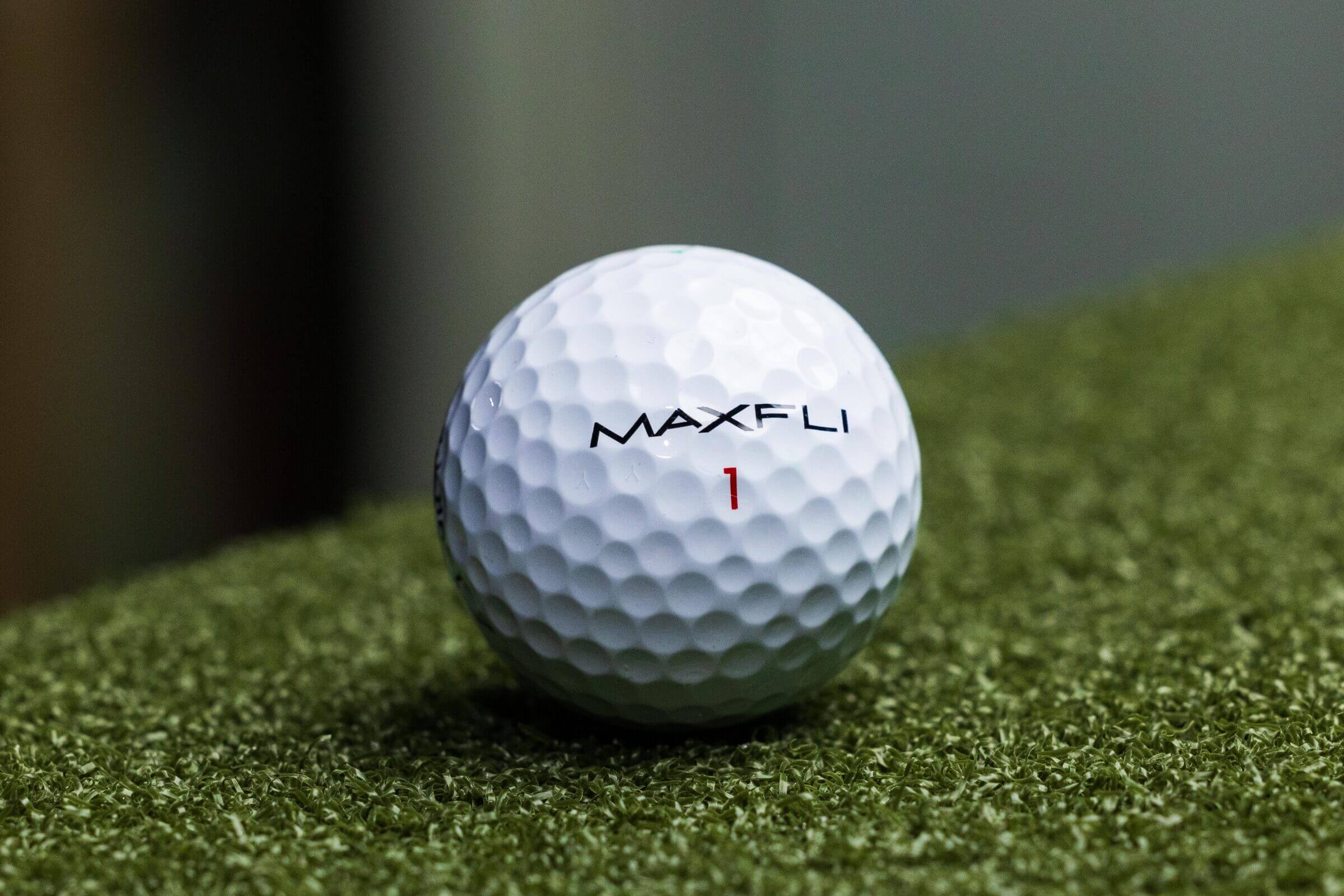
| Pick | Maxfli Tour X | $39.99 | Urethane | 143.4 yds | 231.6 yds |
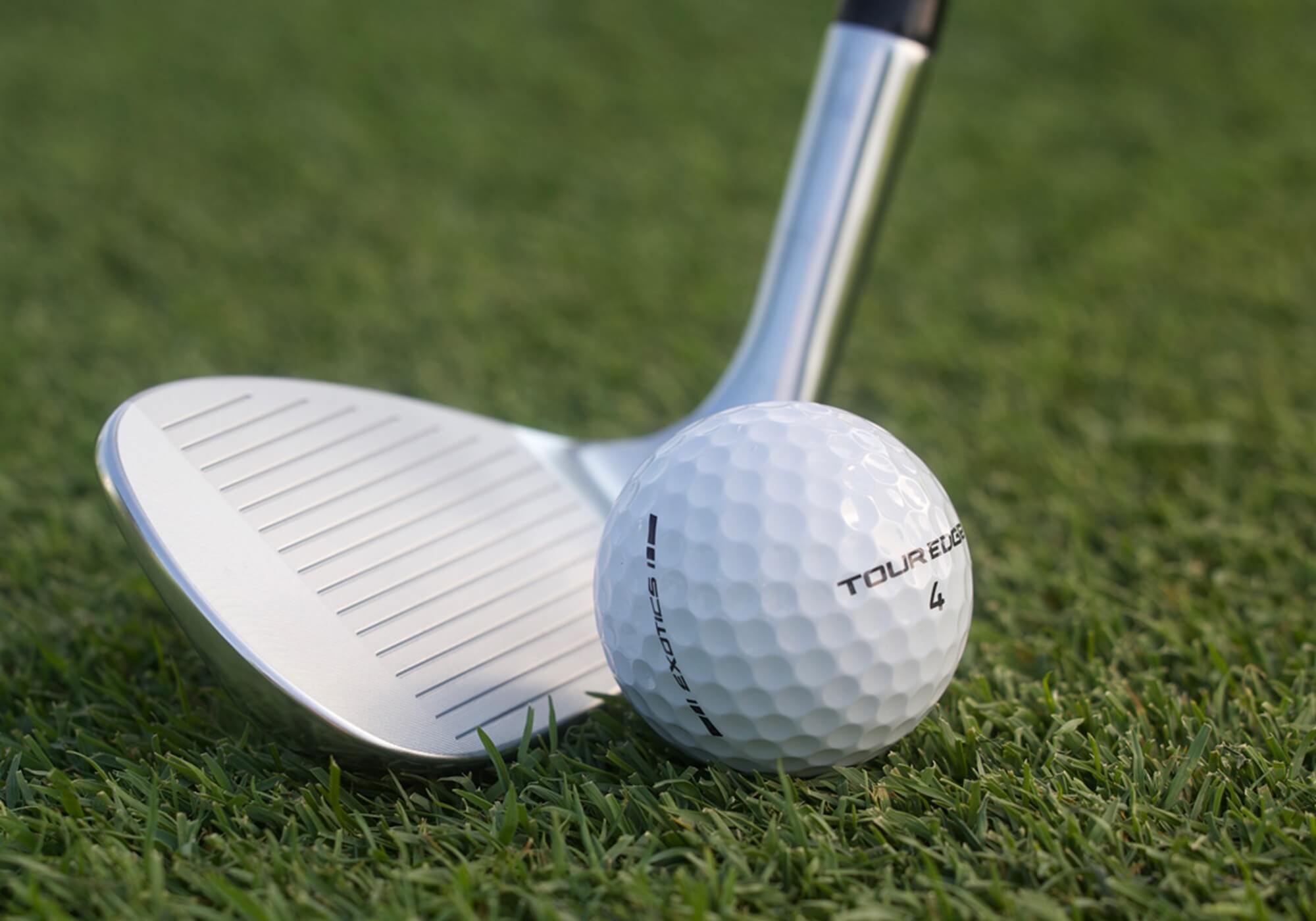
| Alt 1 | Tour Edge Exotics | $39.99 | Urethane | 142.1 yds | 231.2 yds |
| Alt 2 | Titleist TruFeel | $24.99 | Ionomer | 140.9 yds | 231.9 yds |
Why Maxfli Tour X: It’s the only ball in this speed group that lands top six in both categories. It’s not the single longest with either club but nothing else matches its combined profile. Better yet, this isn’t a “long but hollow” pick: in our separate 35-yard wedge test, the Tour X spun 5,850 rpm, sixth-highest of all 48 balls, right alongside the Pro V1x and Z-Star Diamond.
Tour Edge Exotics doesn’t back that up the same way: it spun 5,078 rpm from 35 yards, good for just 30th of 48 and below the field median (5,391 rpm). Long tee to green but it’s giving back real stopping power around the green.
If budget matters more than squeezing out the last half-yard, the Titleist TruFeel is the story here: a $24.99 two-piece ionomer ball that out-drives both urethane picks (231.9 yards) while giving up only ~2.5 yards with the irons. The honest caveat: it spun just 4,283 rpm from 35 yards, 41st of 48, more than 1,500 rpm behind Tour X.
Google is changing how content is shown. Add MyGolfSpy as your preferred source to ensure you don’t miss the latest gear news, instructional tips and buying guides.
Mid swing speed
| Rank | Ball | Price | Cover | Iron Total | Driver Total |
|---|---|---|---|---|---|
| Pick | Callaway Chrome Soft | $54.99 | Urethane | 177.0 yds | 289.7 yds |
| Alt 1 | Callaway Chrome Tour Triple Diamond | $54.99 | Urethane | 171.5 yds | 291.8 yds |
| Alt 2 | Wilson Staff Model | $49.99 | Urethane | 172.1 yds | 289.3 yds |
Why Chrome Soft: It’s the outright longest 7-iron in the entire mid-speed field and still top six off the tee. No other ball in this tier combines a No. 1 iron finish with a top-tier driver number. Chrome Soft was our official low-spin pick for mid swing speed in the main 2026 test. It holds up around the green too, 5,469 rpm from 35 yards, 19th of 48 and above the field median.
Chrome Tour Triple Diamond is the pick if you’re a few mph faster and want to lean into more driver carry (291.8 yards, second-longest of all 48 balls tested) at a very small iron-distance cost although it gives some of that back around the green at 5,021 rpm (31st of 48).
The Wilson Staff Model rounds it out as a strong value alternative: $5 cheaper than the Callaway paired with almost identical numbers in both categories, an official mid-spin pick for this speed group.
Fast swing speed
| Rank | Ball | Price | Cover | Iron Total | Driver Total |
|---|---|---|---|---|---|
| Pick | Tour Edge Exotics | $39.99 | Urethane | 196.4 yds | 325.9 yds |
| Alt 1 | Mizuno Pro S | $49.99 | Urethane | 197.2 yds | 324.5 yds |
| Alt 2 | Callaway Chrome Tour | $57.99 | Urethane | 196.4 yds | 320.0 yds |
Why Tour Edge Exotics: At the fastest swing speeds, this is the clearest “long everywhere” result of the whole test: best combined rank of any ball, top five with both clubs, and it’s the cheapest of the three by a wide margin ($39.99 versus $50-58).
Our full test flagged Exotics as a low-spin driver ball that gets its distance from run-out rather than raw speed, similar in kind to how the TaylorMade Tour Response manufactures distance. And that low-spin profile follows it to the green. It managed just 5,078 rpm from 35 yards, 30th of 48 balls tested. Fast-swing players who like this combo distance-wise should know they’re giving back stopping power on short shots.
Mizuno Pro S is a virtual coin-flip alternative for the Tour Edge Exotics. The problem is that it doesn’t solve any greenside spin issues; it ranks 34th of 48 for wedge spin from 35 yards.
Callaway Chrome Tour is the third option for fast-swing players who prioritize iron distance and don’t mind trailing slightly on the tee shot and it’s the one of the three that holds up best around the green: 5,167 rpm, 28th of 48, right at the field average.
The takeaway
Across all three speeds, a pattern holds: the ball that’s longest with a single club is rarely the ball that’s longest overall. Chasing a single driver number on a launch monitor can steer you toward a ball that’s giving distance back on approach shots where it arguably matters more. Match your pick to your swing speed and then balance your priorities.
One last thing worth flagging: the Total Distance numbers above (like all of ours) include Trackman’s bounce-and-roll math which assumes firm, fast ground conditions. If your home course plays soft, lean a little more on the ionomer/low-spin picks carry numbers than their total numbers since a good chunk of their advantage on paper comes from roll you may not get.
Here’s a look at the complete golf ball test results of 2026: Golf Ball Test 2026.
A single review only tells part of the story. Compare our complete test results, learn why we robot test golf balls and discover what a professional golf ball fitting can teach you about your game.


The post Which Golf Balls Are Long With Both Your Driver AND Your Irons? (By Swing Speed) appeared first on MyGolfSpy.
Source link