

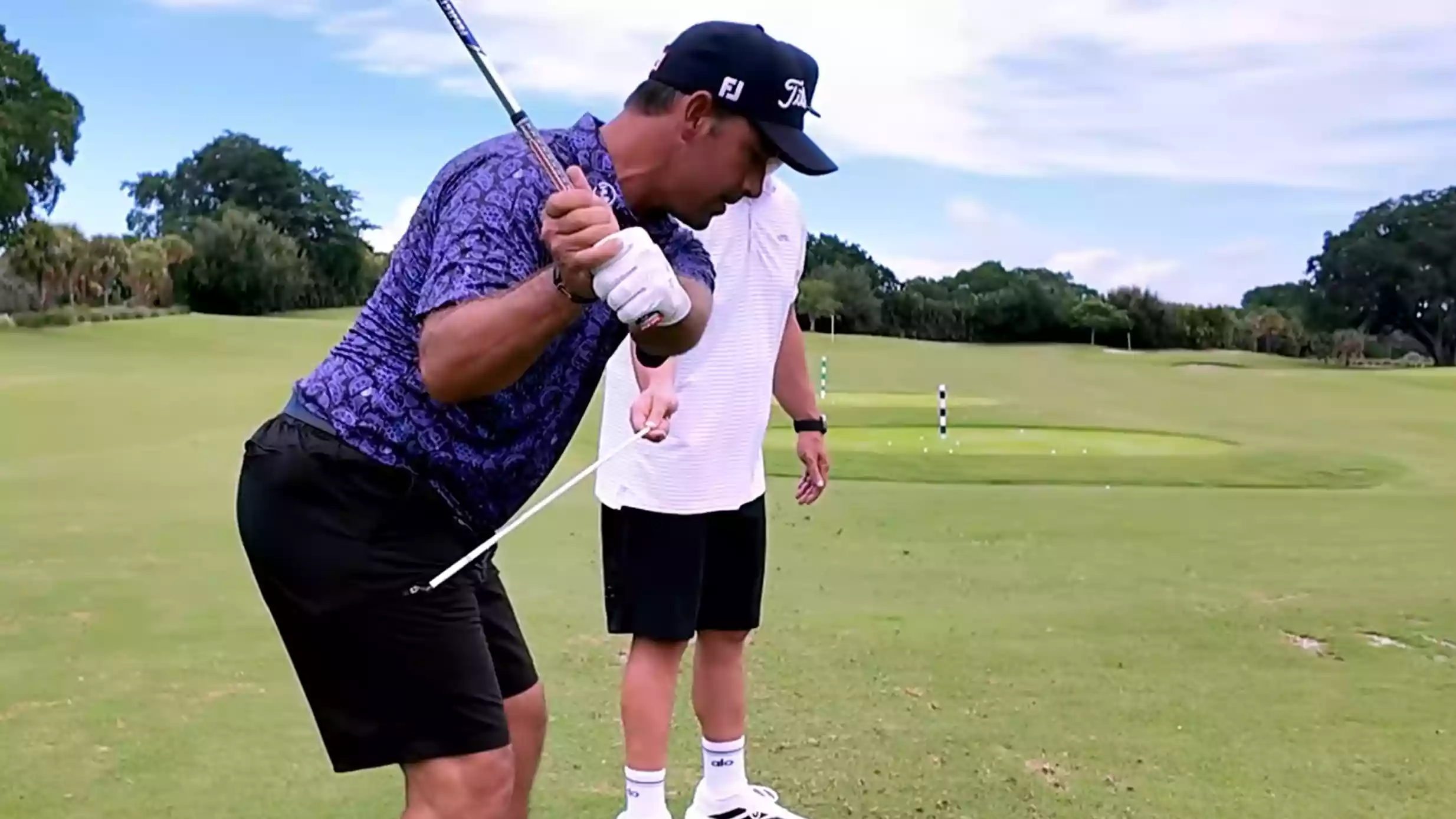
I recently got a couple of my favorite tour students, Rafael Campos and Ty Gingerich, together for one of our performance sessions, where we combine golf instruction with fitness and strategy. Rafa’s out on the PGA Tour, and Ty is getting ready for DP World Tour Q-School, but even at though they are at some of the highest levels of the game, some of what we worked on can be useful for everyday players, too.
I ran the session with Jackson Koert and Kolby Tullier, and you can see more of it in the video below. Jackson is one of the best young teachers in the game, and Kolby trains a ton of PGA Tour players from his base in Florida. That’s the whole idea behind a performance session. Instead of one coach trying to cover everything, we combine what each of us sees best and put it in front of the player at the same time.
During our sessions, we used three drills that any golfer can use to hit the ball better, which you can read about below.
1. Assisted and resisted rotation
The first drill is what I call assisted and resisted rotation. I loop a strap around the player’s shoulders while his arms stay crossed over his chest, then pull one way to help him get into his trail leg and build some real load there. Then I switch and pull the other way so he has to brake against it instead of simply running out of turn.
Most players think braking means getting to the top and waiting for the arms to catch up, but that’s backwards. The energy has to come up through the ground first. Do the drill right, and you’ll feel your lead shoulder get all the way over your trail foot at the top, with a real stretch you can hold for a count before you start down.
2. Sequence isolation
The second drill isolates the sequence itself. I hold the other end of the strap and physically pull the player into the transition, so the left hip has to be the first thing that moves, not the hands or the shoulders.
That’s really going to feel weird for a lot of players because they’ve literally never made a swing without throwing the club and hands out first. You can build a version of this yourself with any partner and a resistance band. Have them pull you toward the target right as you start down, and pay attention to what leads. If your hands win that race instead of your hip, the band makes it obvious immediately.
3. Electric fence
The last drill is my favorite, and we call it the electric fence.
If I hold a foam roller or an alignment stick just in front of your hips as you make slow-motion downswings, you have to turn your hips so that the left one moves around and back, giving you space to make your downswing. If you pitch forward or spin out, you’ll hit the roller or stick. We joke that you should think of it as an electric fence — if you hit it, it will be unpleasant.
Part of what makes a session like this work is that it doesn’t end when the players leave. Rafa’s going to keep doing these drills with Ty on the road, the same way tour players lean on each other between events.
None of it is tour-pro-only, either. Load for real, turn the way you should, and give yourself room to hit, and the club starts doing the work for you.
The 2026 GOLF Top 100 Teachers Summit is set to take place Nov. 1-4 at Omni La Costa Resort & Spa in Carlsbad, Calif.
View Product